
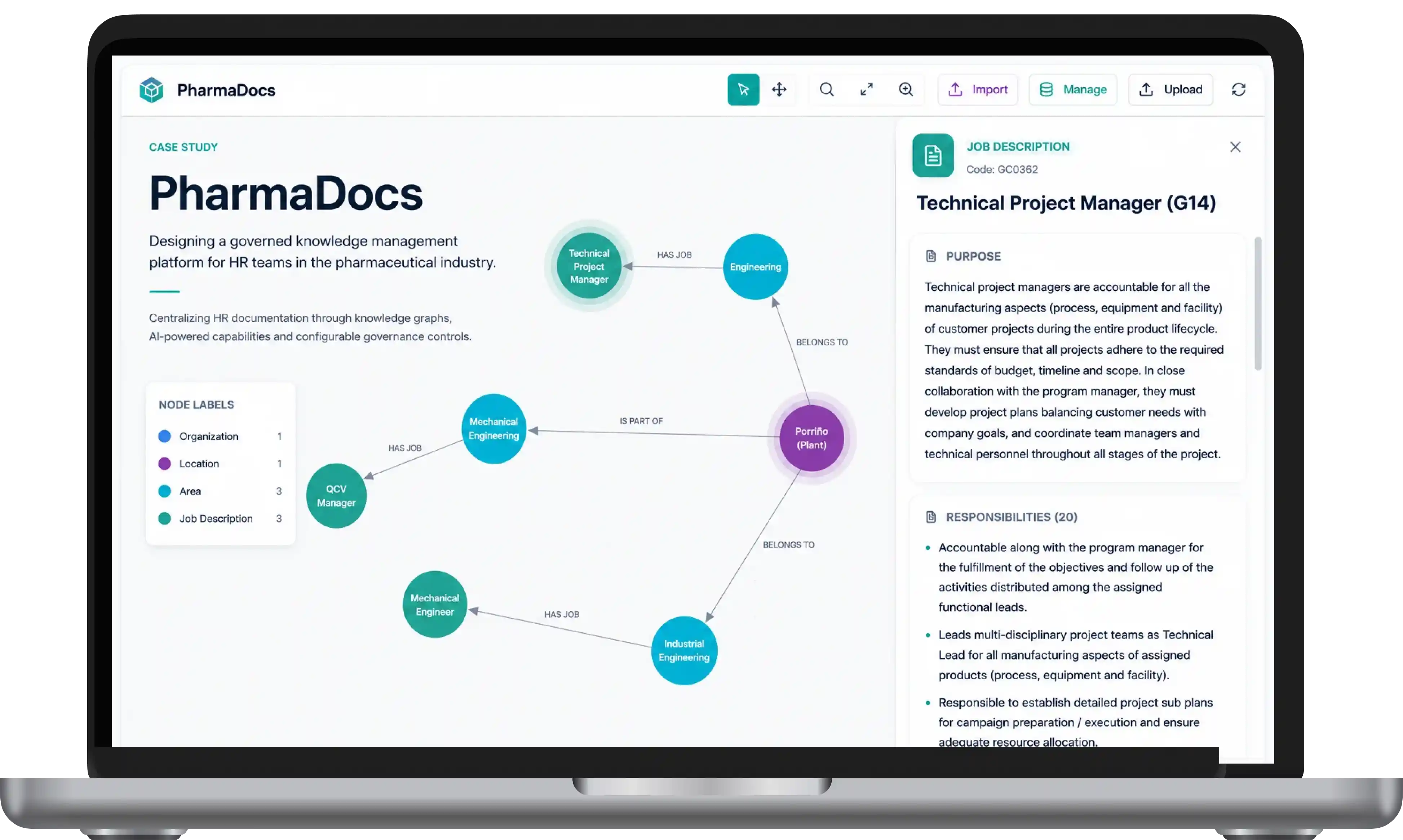
Designing a secure document management platform for HR teams in the pharmaceutical industry
ROLE
Lead Product DesignerLed the product design from strategic definition to user experience implementation
SKILLS
Enterprise UX, Information Architecture, Knowledge Graph Design, RBAC, AI-Assisted Experiences, Interaction Design, Design Systems
TIMELINE
3 months
OVERVIEW
A pharmaceutical company needed a centralized platform to manage HR documentation while ensuring governance, traceability and secure access to sensitive information.
As documentation volumes increased, information became scattered across multiple repositories, making it difficult to maintain consistency, visibility and control. At the same time, the organization wanted to introduce AI-powered capabilities without compromising compliance requirements or administrative oversight.
The result was a centralized platform that combines document management, knowledge visualization and configurable governance controls within a single ecosystem.
As documentation volumes increased, information became scattered across multiple repositories, making it difficult to maintain consistency, visibility and control. At the same time, the organization wanted to introduce AI-powered capabilities without compromising compliance requirements or administrative oversight.
The result was a centralized platform that combines document management, knowledge visualization and configurable governance controls within a single ecosystem.
The Challenge
Managing documentation was no longer simply a storage problem.
HR teams needed to access and maintain large volumes of employee-related information, while administrators required visibility and control over permissions, governance policies and AI-powered features.
Several challenges emerged:
HR teams needed to access and maintain large volumes of employee-related information, while administrators required visibility and control over permissions, governance policies and AI-powered features.
Several challenges emerged:
- Information distributed across disconnected repositories
- Limited visibility into how documents were related
- Growing complexity in managing permissions and access
- Lack of centralized governance mechanisms
- Need for controlled adoption of AI-powered capabilities
- Compliance requirements typical of a highly regulated industry
The challenge was to create a system that could centralize information while balancing usability, governance and security.
User Groups
Through interviews, we identified three primary user groups.
1. Admin
Responsible for governance, permissions, user management and AI configuration.Responsible for platform governance and administration.
1. Admin
Responsible for governance, permissions, user management and AI configuration.Responsible for platform governance and administration.
2. HR Specialist
Responsible for managing employee documentation and navigating document relationships.
3. Manager
Responsible for accessing and contributing documentation relevant to their area of responsibility.
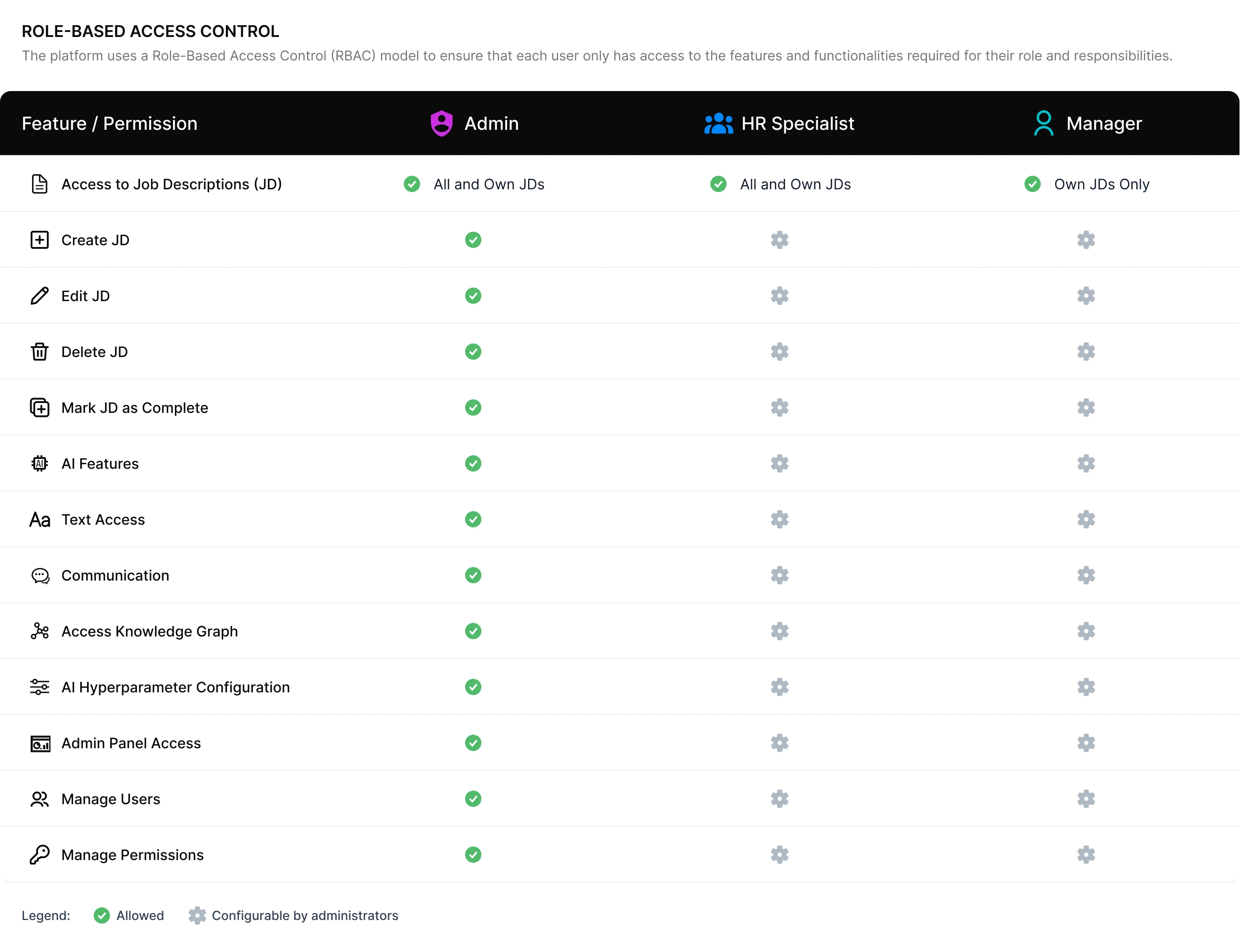
Although users share the same platform experience, access to functionality is controlled through a configurable permission framework.
Designing a Scalable Permission Framework
One of the biggest challenges was ensuring secure access to sensitive HR documentation while keeping the platform simple and efficient for everyday users.
Although all users worked within the same platform, their responsibilities varied significantly. Managers, HR specialists and administrators needed access to different capabilities while maintaining a consistent experience across the product.
Rather than relying on fixed access models, the platform was designed around a configurable permission system that allows organizations to adapt access according to their operational needs.
This approach provides flexibility while ensuring governance standards are maintained.
Although all users worked within the same platform, their responsibilities varied significantly. Managers, HR specialists and administrators needed access to different capabilities while maintaining a consistent experience across the product.
Rather than relying on fixed access models, the platform was designed around a configurable permission system that allows organizations to adapt access according to their operational needs.
This approach provides flexibility while ensuring governance standards are maintained.
Why this matters
The permission framework serves two purposes:
- Protect sensitive information and administrative functions
- Ensure users only interact with functionality relevant to their responsibilities
This balance between accessibility and governance became a core design principle throughout the project.
Designing for Traceability
Through discovery sessions, a recurring challenge emerged: understanding how documents related to one another.
Traditional folder-based structures made it difficult to identify dependencies, connections and information flows across the organization.
To address this, the platform introduced a document relationship graph that allows users to visualize connections between documents and navigate information through context rather than hierarchy.
This transformed documentation from a collection of files into a connected knowledge ecosystem.
Traditional folder-based structures made it difficult to identify dependencies, connections and information flows across the organization.
To address this, the platform introduced a document relationship graph that allows users to visualize connections between documents and navigate information through context rather than hierarchy.
This transformed documentation from a collection of files into a connected knowledge ecosystem.
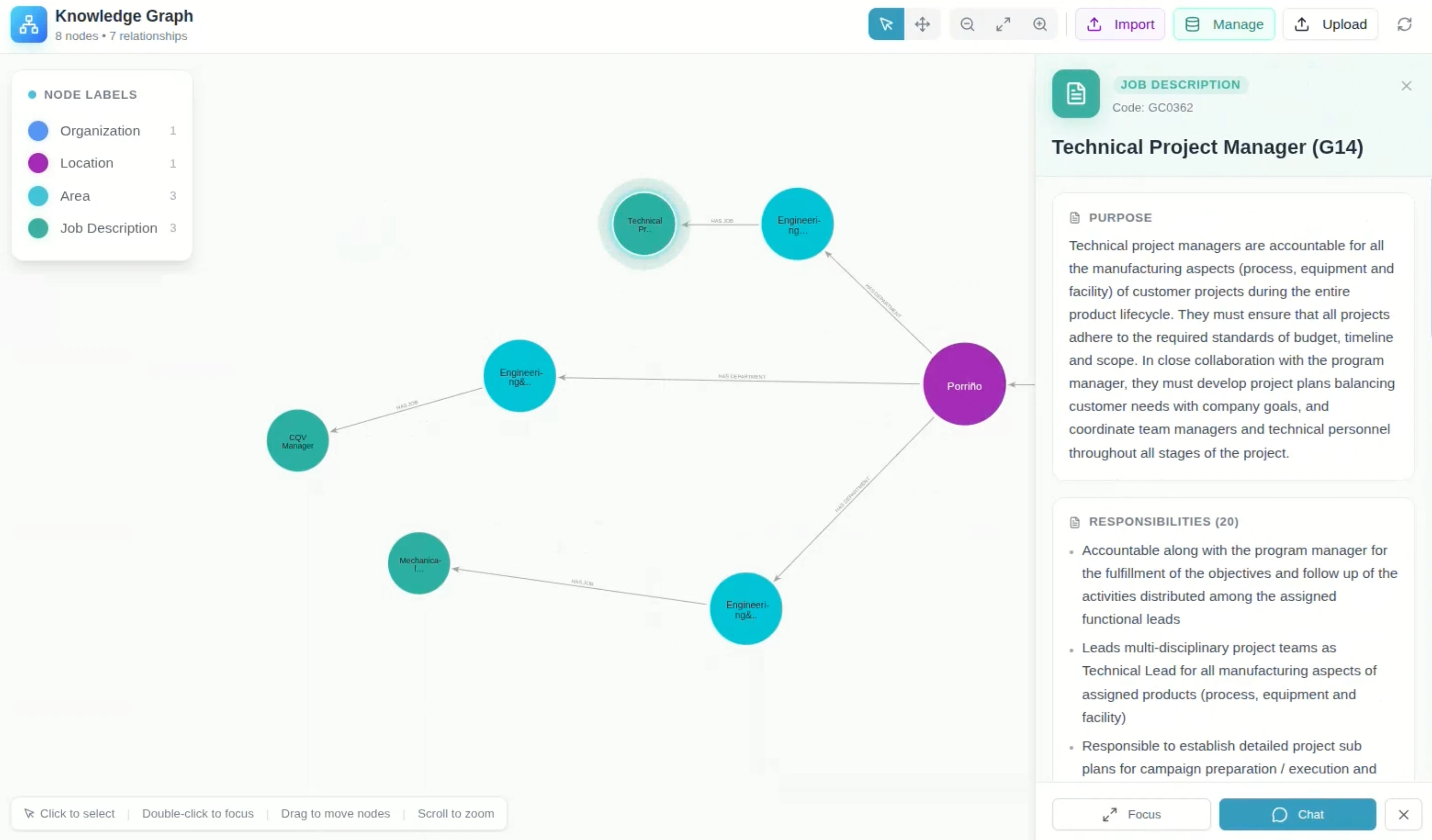
Knowledge graph visualization showing relationships between job descriptions, organizational structures and business entities, providing greater traceability and contextual understanding.
Integrating AI Responsibly
AI-powered capabilities were introduced to support document-related workflows and improve operational efficiency.
However, because AI configurations directly influence how information is processed and surfaced, governance became a critical consideration.
To ensure transparency and control:
However, because AI configurations directly influence how information is processed and surfaced, governance became a critical consideration.
To ensure transparency and control:
- AI settings were centralized within the administration area
- Configuration access was restricted to authorized users
- Administrative oversight was maintained over AI behaviour and system parameters
This approach allowed the organization to leverage AI while preserving accountability and governance standards.
Key Design Decisions
1. Centralized Document Repository
A single environment for storing, accessing and managing documentation. This reduced fragmentation and improved consistency across teams.
2. Document Relationship Graph
A graph-based approach replaced traditional navigation patterns, helping users understand document dependencies and information flows more effectively.
3. Governance-First Administration
User management, permissions and AI controls were consolidated into a dedicated administration layer. This created a scalable foundation for future organizational growth.
4. Flexible Permission Management
The platform supports configurable permissions, allowing organizations to adapt access models without requiring product changes. This improves scalability and reduces administrative overhead.
Solution Walkthrough
The video below demonstrates the complete platform experience, including:
- Document management workflows
- Permission management
- User administration
- AI configuration
- Document relationship visualization
- Governance controls
Outcomes
The platform established a centralized and governed environment for HR documentation management.
Key outcomes included:
Key outcomes included:
- Improved document traceability
- Greater visibility into information relationships
- Stronger governance and administrative control
- Centralized management of permissions and access
- Scalable support for future organizational growth
- Secure adoption of AI-powered capabilities
Reflection
This project reinforced the importance of designing beyond interfaces.
The most significant challenge was not managing documents themselves, but creating a system capable of balancing accessibility, governance and operational control within a highly regulated environment.
By focusing on traceability, permission management and responsible AI adoption, the platform evolved from a document repository into a scalable knowledge management ecosystem.
The most significant challenge was not managing documents themselves, but creating a system capable of balancing accessibility, governance and operational control within a highly regulated environment.
By focusing on traceability, permission management and responsible AI adoption, the platform evolved from a document repository into a scalable knowledge management ecosystem.
More Projects
A collection of projects showcasing my approach to solving complex UX challenges across different industries.
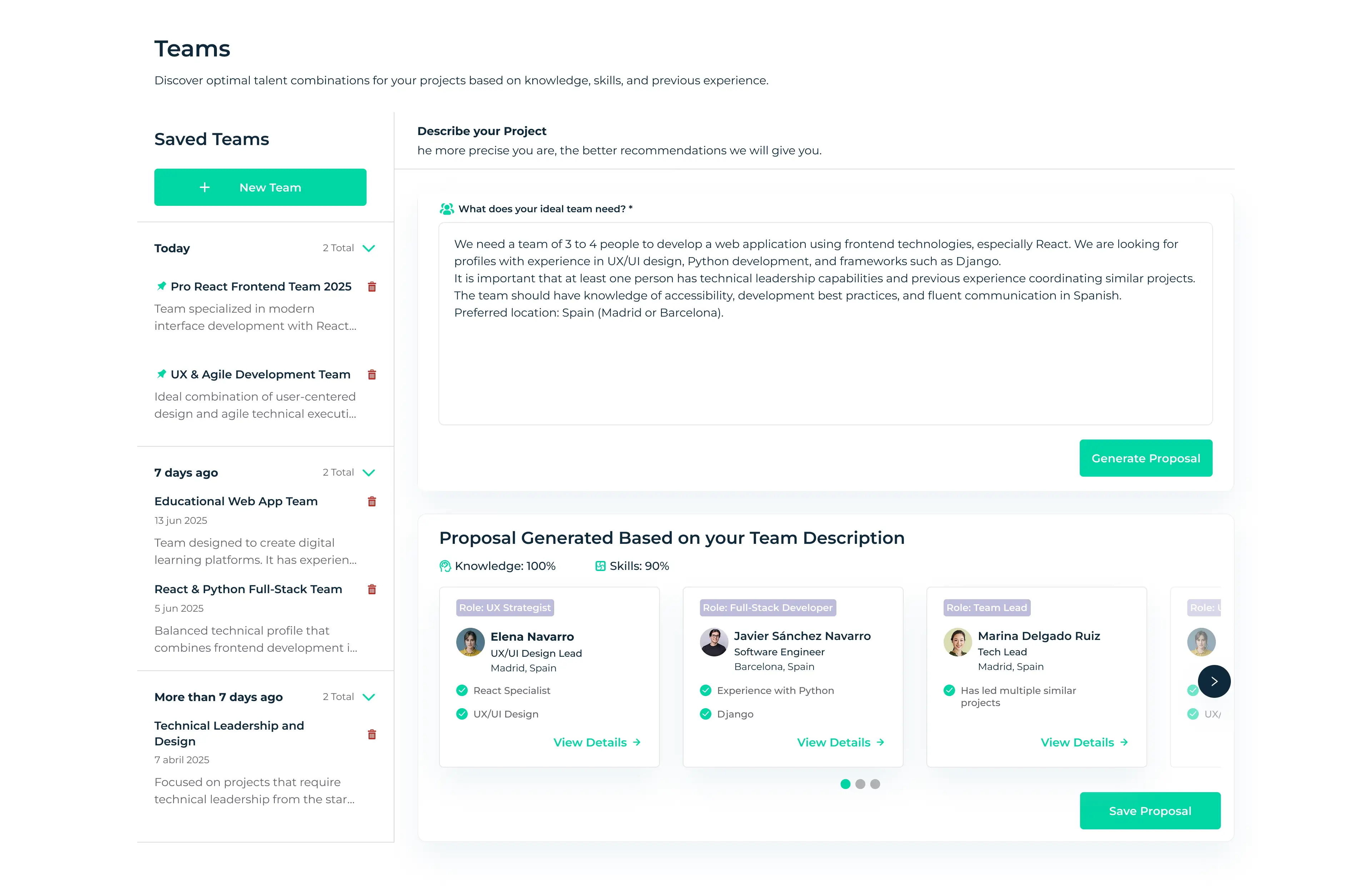
Talent Intelligence
Transforming workforce planning through AI-powered team generation and talent insights.
AI
SaaS
HR Tech
End-to-end product redesign
View Case Study
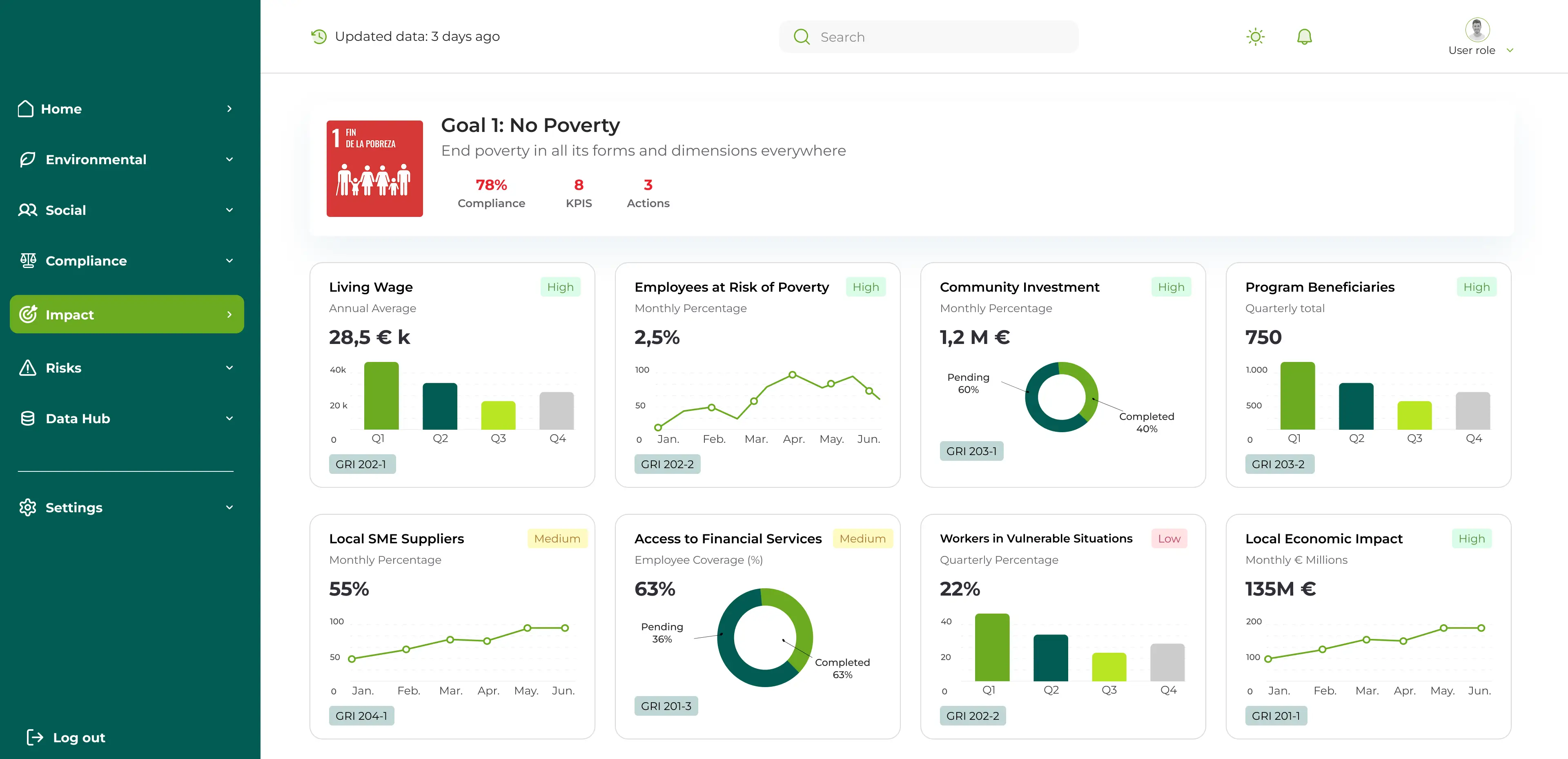
ESG Data Hub
Improving trust and transparency in ESG data collection and validation.
Data Visualization
B2B SaaS
ESG
MVP strategy & design
View Case Study